
Exploring Chinese Culinary Culture
For tourists visiting China, sampling its cuisine is undoubtedly one of the most anticipated highlights of the trip. Chinese food is far more than mere sustenance; it is a flowing history, a form of social interaction, and a window into understanding China's regional cultures.
Dining Philosophy and Status
In China, the ancient saying "Food is the paramount necessity of the people" reflects the supreme importance of diet in daily life. Chinese cuisine emphasizes the perfect harmony of "color, aroma, and taste," while also focusing on the balance of Yin and Yang and the health-preserving aspects of food therapy. Dining together is one of the most important social activities for Chinese people, and the practice of sharing dishes around a round table embodies the values of harmony and sharing.
Major Regional Cuisines
China's vast territory gives rise to extremely diverse culinary cultures, often categorized into the "Four Major Cuisines" or "Eight Major Cuisines." Here are some of the most internationally renowned:
Sichuan Cuisine: Hailing from Sichuan Province, it is famous for its "numbing (Numbingmá)" and "spicy (Spicylà)" flavors, but its essence lies in complex flavor profiles like "Yuxiang" (fish-fragrant) and "Guaiwei" (strange flavor). Representative dishes include Mapo Tofu, Kung Pao Chicken, and Boiled Fish. However, not all Sichuan dishes are spicy; exceptions like "Boiled Cabbage in Supreme Broth" exist.

Cantonese Cuisine: Originating from Guangdong Province, it emphasizes fresh ingredients and original flavors, with exquisite cooking techniques, especially steaming and stir-frying. Dim Sum, BBQ roasted meats, and slow-simmered soups are highly characteristic. Representative dishes include White Cut Chicken, Roast Suckling Pig, and various shrimp dumplings (Har Gow) and pork dumplings (Siu Mai).

Huaiyang Cuisine: From the Jiangsu region, it is known for its fine knife skills, mild and balanced flavors, and elegant presentation. It is often chosen for state banquets. Representative dishes include Stewed Pork Meatballs with Crab Roe, Soft-Simmered Tofu Strips, and Squirrel-Shaped Mandarin Fish.

Shandong Cuisine: From Shandong Province, it forms the basis of Northern Chinese cooking, specializing in quick-frying, stir-frying, and braising, with salty and umami tastes. Representative dishes include Braised Sea Cucumber with Scallions and "Nine-Turn" Large Intestine.

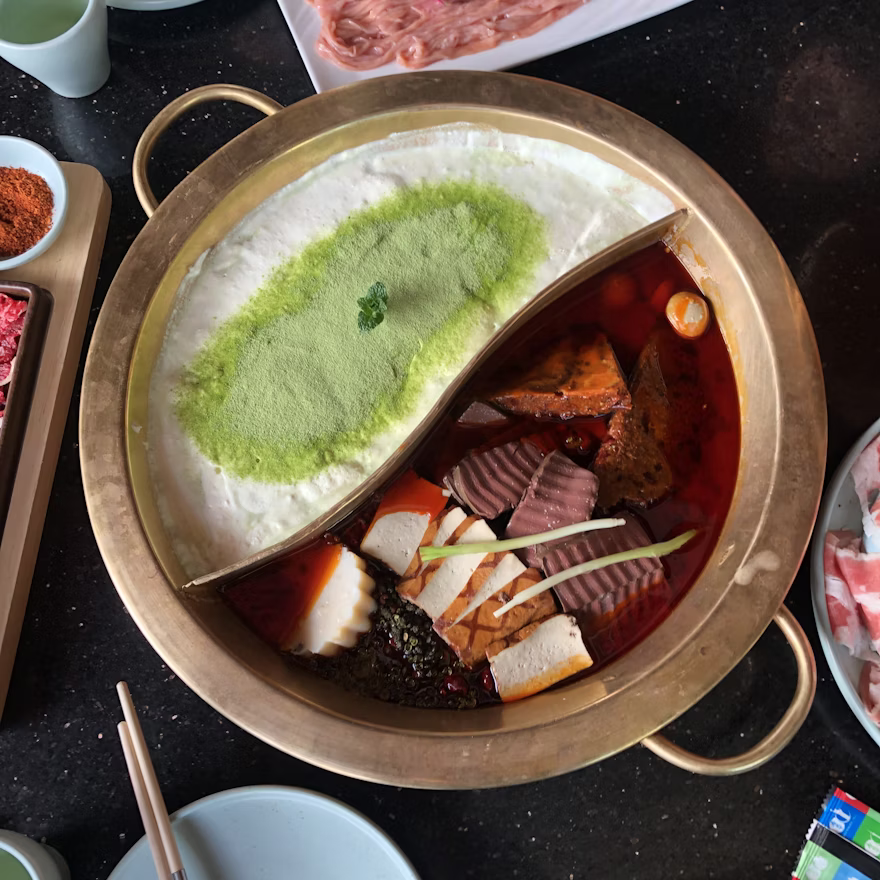
Hot Pot: This is more than a dish; it's a beloved communal dining experience. Diners sit around a pot of simmering broth (spicy, clear, tomato, etc.) and cook a variety of raw ingredients themselves. The fun lies in customizing your own dipping sauce.
Street Food & Local Flavors
To experience the most authentic Chinese tastes, one must venture into night markets and snack streets. These snacks are affordable and uniquely flavorful:
Beijing: Douzhir (fermented mung bean drink) with Jiaoquan (fried ring), Luzhu Huoshao (stewed pork offal with baked wheat cake), Peking Duck (though now a banquet dish, it originated from the streets).
Shanghai: Soup Dumplings (Xiaolongbao), Pan-Fried Pork Buns (Shengjianbao), Scallion Oil Noodles.
Chengdu: Wontons (Long Chaoshou), Dan Dan Noodles, Skewers Hot Pot (Chuanchuanxiang).
Xi'an: Roujiamo (Chinese Hamburger), Liangpi (Cold Skin Noodles), Pita Bread Soaked in Lamb Soup.
Dining Etiquette and Customs
Family-Style Sharing: Meals are typically served family-style, with shared dishes placed in the center, and everyone has their own bowl for rice.
Pouring Tea & Alcohol: It is polite to refill others' tea cups or wine glasses before your own. The recipient often taps the table with bent fingers to express thanks. Toasting with "Ganbei!" (Bottoms up!) is common, but you are not necessarily expected to finish your drink.
Seating Arrangement: At a round table, the seat facing the door is usually considered the seat of honor, reserved for the host or the most senior guest.
Chopstick Taboos: Do not stick chopsticks upright in a bowl of rice (as it resembles incense offered to the deceased), and avoid pointing at people with chopsticks.
Practical Tips for Tourists
Be Adventurous: Don't be intimidated by unfamiliar dish names; many delicacies lie in seemingly ordinary ingredients.
Use Apps Wisely: Utilize apps like "Dianping" to check reviews and recommended dishes for nearby restaurants.
Start with Dim Sum: Cantonese Dim Sum is an excellent introduction, allowing you to try a wide variety of small-portioned foods.
State Your Preferences: If you cannot eat spicy food, be sure to clearly state "No Spice(Bù yào là)" when ordering.
